
"coffee consumption history"
2000 article(s) found

Costa Rican Coffee House-Diamond Hill Coffee House Costa Rican Coffee House
Costa Rican coffee cultivation was introduced from Cuba in 1779 and exported for the first time in 1820. There are about 32,000 coffee farmers in Costa Rica, with an average cultivation area of less than one hectare (10,000 m2) per farmer. Costa Rica has a population of 4.1 million (2006), coffee cultivation area of 82,500 hectares, annual production of 1.7 million bags (60kgs per bag), annual domestic consumption of 380,000 bags, flat

Flavor Clear Costa Rican Tara Beads Fine Coffee Bean Origin Development History Culture Introduction
The Colombian people say coffee has changed the country and has made a remarkable contribution to its rich environment.Although Colombia ranks third from the bottom in terms of land area in Central America, its economic environment is better than half that of other countries.Because of its rich people and stable society, Costa Rica has more than 30 national parks. Coffee in 1729

The History of Costa Rican Coffee will Costa Rican coffee be very fruity?
Professional coffee knowledge exchange more coffee bean information please follow the coffee workshop (Wechat official account cafe_style) what are the Costa Rican coffee brands? Coffee from Costa Rica has always been very popular with guests. I have thought about why she was able to break out of other individual coffees: one of the famous representatives of Central American coffee; besides the rich flavor and excellent quality of coffee

History of coffee in Indonesia _ which brand of coffee to buy in Indonesia tastes good _ which is better in Indonesia
Coffee workshop (Wechat official account cafe_style) Coffee business in Indonesia originated in 1696 during the Dutch colonization of Indonesia, from a spice farm in Batavia to a coffee producing area, making Java and Sumatra today famous as the third largest coffee exporters in the world. From traditional coffee to special coffee
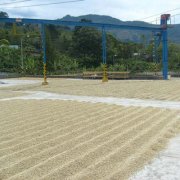
Costa Rican Diamond Hill Manor boutique coffee beans Costa Rican coffee flavor Costa Rica
Costa Rican coffee cultivation was introduced by Cuba in 1779 and exported for the first time in 1820. There are about 32000 coffee farmers, with an average planting area of less than one hectare (10000 hectares) per farmer. Costa Rica has a population of 41 billion (2006), with a coffee planting area of 82500 hectares and an annual production of 1.7 million bags (60kgs per bag). The annual domestic consumption is 380000 bags.

A brief introduction to the History and Culture of the Origin and Development of Costa Rica Saint Roman Fine Coffee beans
The coffee trees planted in Costa Rica are all Arabica coffee trees, and the quality of coffee beans is better and more stable through improvement. In order to facilitate picking, coffee trees are kept at a height of about 2 meters through continuous pruning. The coffee that people eat is the taste of the seeds in the fruit that are brewed in water. After picking raw coffee beans, the peel, pulp, seed film and sun exposure must be removed.

A brief introduction to the history and culture of the origin and development of Costa Rica's Saint Roman boutique coffee beans.
All the coffee trees planted in Costa Rica are Arabica coffee trees. through improvement, the quality of coffee beans is better and more stable. in order to facilitate picking, coffee trees are kept at a height of about 2 meters through continuous pruning. The coffee that people eat is the taste of the seeds in the fruit that are brewed in water. After picking raw coffee beans, the peel, pulp, seed film and sun exposure must be removed.

Costa Rica Diamond Hill Manor single Bean species, Brand recommendation and Manor introduction
For the exchange of professional baristas, please follow the coffee workshop (Wechat official account cafe_style) Costa Rica Diamond Hill Manor single bean varieties, brand recommendations and manor introduction are also mentioned on another website, most of the varieties grown here are Red Catuai, that is, a hybrid of Caturra and Mundo Novo. The granules of these raw beans are not large, about 15.

Differences, distinctions and prizes of single beans at Diamond Hill Manor in Costa Rica
For the exchange of professional baristas, please pay attention to the coffee workshop (Wechat official account cafe_style) Costa Rica Diamond Hill Manor single bean differences, distinctions and awards Costa Rica coffee cultivation was introduced from Cuba in 1779 in 1820 before the first export of coffee, there are about 32000 coffee farmers, the average planting area per farmer is less than one hectare.

How does coffee enter countries all over the world? how does it develop in all countries?
With the first coffee bean picked, the first roasting test, the first grinding, the first blending and the mellow smell of the first cup of hot coffee, the legend of coffee cultivation and coffee culture spreading on our small planet has become one of the greatest and most romantic stories in history.

The history of coffee cultivation in Costa Rica for more than 200 years has created the characteristics of coffee flavor with excellent acidity.
For the exchange of professional baristas, please pay attention to the coffee workshop (Wechat official account cafe_style) Costa Rican coffee is produced in the Republic of Costa Rica in the southern part of Central America. Costa Rican coffee is an important economic source of Costa Rica. It was introduced in 1808 and has been cultivated for more than 200 years. The coffee beans produced in the high latitudes of Costa Rica are famous and rich in the world.

Flavor characteristics, producing areas and cooking parameters of single bean in Diamond Hill Manor, Costa Rica
For the exchange of professional baristas, please pay attention to the coffee workshop (Wechat official account cafe_style) Costa Rica Diamond Hill Manor single bean flavor characteristics, producing areas and brewing parameters Costa Rican coffee was first exported in 1779 when it was introduced from Cuba in 1820. There are about 32000 coffee farmers, with an average planting area of less than one hectare (1).
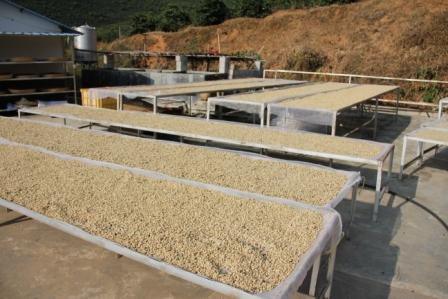
Costa Rican boutique coffee beans Costa Rica Tarazu Diamond Villa washing SHB Kaddura
Costa Rican coffee plants were imported from Cuba in 1779 and exported for the first time in 1820. There are now about 32000 coffee farmers, with an average of less than 10000 yuan per farmer. Costa Rica has a population of 410 million (2006), an active coffee planting area of 82500 square meters, an annual output of 1.7 million bags (60kgs per bag), and an annual consumption of 38 million bags in China.

A brief Analysis of the Future Development trend of domestic themed Cafe is the Development Prospect of domestic themed Cafe good
Coffee is no longer just a drink. From beginning to end, it is closely related to cultural development and has become a symbol of an important period in history. Now, following Wangsen Coffee West Point School, let's take a look at the development of domestic themed cafes. Coffee flows slowly in the cups of the French Enlightenment giants who changed the course of human thought. Coffee is a heavy burden on the shoulders of Brazilian slaves in the imperialist era.

A brief introduction to the origin, development, history and culture of Tarazhu boutique coffee beans in Costa Rica
Excellent Costa Rican coffee is called extra hard beans, and this kind of coffee can grow at an altitude of more than 1500 meters. Altitude has always been a problem for coffee growers. The higher the altitude, the better the coffee beans, not only because the higher altitude can increase the acidity of the coffee beans and thus increase the flavor, but also because the night temperature at the higher altitude is lower, which can make the trees grow slowly.

With the third wave of coffee revolution, China's coffee market will usher in a new round of local changes.
Communication of professional baristas Please follow the coffee shop (Wechat official account cafe_style) Wen / Zhu Danpeng I am not at home, in the coffee shop; not in the coffee shop, on the way to the coffee shop. Balzac who said this drank 50,000 cups of coffee in his life. Nowadays, coffee has become one of the most popular drinks in the world. According to the statistics of Euromonitor, except for a few sub-countries

How about the cultivation of single bean in Diamond Hill Manor in Costa Rica? single bean harvest in Diamond Hill Manor
For the exchange of professional baristas, please pay attention to the coffee workshop (Wechat official account cafe_style) Costa Rican population 41 billion (2006), coffee planting area of 82500 hectares, annual production of 1.7 million bags (each bag of 60kgs) domestic annual consumption of 380000 bags, the average annual national consumption of 5.5kgs, which is higher than that of Japan (consumption 4kgs), the current average of Taiwanese is

Grading, price, raw bean and baking curve of single bean at Diamond Hill Manor in Costa Rica
The exchange of professional baristas please follow the coffee workshop (Wechat official account cafe_style) Costa Rica Diamond Hill Manor single bean classification, price, raw beans and baking curve Costa Rica Costa Rican population: 4586000 in the past, Costa Rica has successfully sold its coffee according to the name of the region where it is produced. However, tastes vary from region to region, so this is not true.

Chinese coffee culture the history of coffee introduced into China is not long.
The history of the introduction of coffee into China is not long, and it was not until 1884 that coffee was first planted in Taiwan Province. In the mainland of the motherland, the earliest coffee cultivation began in Yunnan. At the beginning of the 20th century, French missionaries brought the first batch of coffee saplings to Binchuan County, Yunnan Province, and began to grow coffee in the mainland. In terms of natural conditions, many parts of our country and

A brief introduction to the History and Culture of the Origin and Development of Costa Rican Yerzaro Coffee
Natural resources include iron, manganese, mercury, bauxite, gold and silver, among which the reserves of bauxite, iron and coal reach 150 million tons, 400 million tons and 50 million tons respectively. The recent situation is mainly distributed in the central gold belt area of the northwestern Tilaran Cordillera Mountains. Calcium carbonate is distributed in the northwest and has high taste. The purity of calcium carbonate extracted from limestone can reach 99.5%. Brother